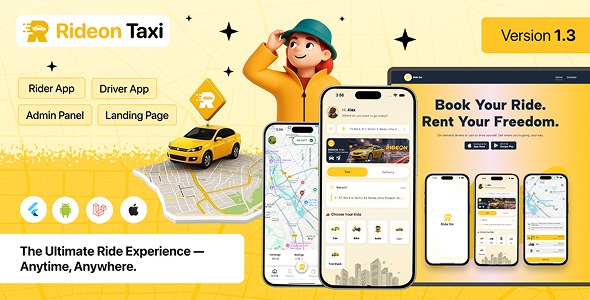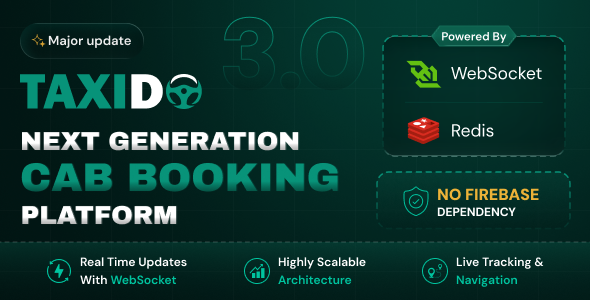
Taxido is designed to replicate and extend the core functionalities of popular ride-hailing apps, incorporating advanced modules for taxi booking, cab rentals, bidding systems, and parcel delivery. The template emphasizes scalability, supporting multi-language and multi-currency setups, which makes it ideal for global markets. Whether you’re building a localized taxi service or a comprehensive logistics platform, Taxido provides the foundational building blocks to accelerate development.
Key Features Breakdown
Taxido’s strength lies in its modular design, catering to all stakeholders in the ride-sharing ecosystem. Below, we explore the primary components.
Rider App Features
The rider-facing app is intuitive and feature-rich, ensuring a seamless user experience. Key highlights include:
- Multiple login options: Email, phone number, or social media integration via Firebase.
- Theme flexibility: Support for light/dark modes and right-to-left (RTL) layouts for diverse user preferences.
- Booking versatility: Schedule rides, book parcels or freight, and access vehicle rentals with real-time map integration using Google Maps or OpenStreetMap (OSM).
- Payment and incentives: Integrated wallet system, coupon code redemption, and diverse payment gateways.
- Communication tools: Live chat with drivers and push notifications for updates.
- Post-ride engagement: Distance-based tracking, saved locations, ratings, and a support ticket system.
These features empower riders with control and convenience, mirroring the polished interfaces of established apps like Uber.
Driver App Features
Drivers benefit from a dedicated app that streamlines operations and boosts earnings potential. Notable elements are:
- Streamlined onboarding: Easy authentication and vehicle registration with document management.
- Customizable interface: Light/dark mode and RTL support for accessibility.
- Opportunity management: Handle ride requests, participate in bidding, and manage availability toggles.
- Business tools: Subscription plans for premium features, withdrawal requests, and earnings tracking.
- Navigation and interaction: Google Maps/OSM integration for routes, live chat with riders, and real-time notifications.
This app positions drivers as active participants, with bidding mechanics adding a competitive edge similar to InDrive’s model.
Admin Panel Capabilities
The web-based admin panel, built on Laravel, serves as the command center for platform oversight. It includes:
- Comprehensive dashboards: Monitor bookings, user profiles, driver verifications, and vehicle fleets.
- Advanced management: Oversee rentals, subscriptions, bidding auctions, and parcel logistics.
- Support infrastructure: Ticket resolution system and customizable settings for languages and currencies.
- Analytics and controls: Generate reports, handle payments, and enforce compliance.
Admins appreciate the panel’s depth, which allows for granular control without overwhelming complexity.
Technical Stack and Implementation
Taxido leverages modern technologies for cross-platform compatibility and performance. The frontend utilizes React Native v0.74 on React v18, enabling native-like apps for Android (with APK demos provided) and iOS. The backend combines Node.js v20 for API handling and Laravel v11.40 for the admin panel, paired with Firebase Firestore for real-time database operations. Push notifications via Firebase Cloud Messaging (FCM) and social logins further enhance integration.
Installation is straightforward, with detailed documentation available, including demo credentials for testing. However, users must account for external dependencies like Google Maps API keys and Firebase setup, which incur additional costs based on usage. The inclusion of a Figma UI kit aids in custom theming, while OSM support offers a cost-effective mapping alternative.
Conclusion
Taxido emerges as a powerhouse in the mobile app templates category, particularly for those eyeing the $100+ billion ride-sharing market. Its all-in-one approach to taxi booking, rentals, bidding, and parcel services, backed by a solid React Native-Laravel stack, makes it a smart investment for startups and agencies. While external dependencies pose minor hurdles, the template’s extensibility and modern features outweigh them. If you’re seeking a customizable clone of Uber or Grab, Taxido deserves a spot on your shortlist-download the demos and start prototyping today.